How Does Manual Resuscitator Work?
Article Summary
A manual resuscitator is a life-saving medical device used to provide positive pressure ventilation to patients who are not breathing or not breathing adequately. This article explains how a manual resuscitator works, its core components, correct usage procedures, clinical applications, and common operational mistakes to avoid. It is designed to help healthcare providers, emergency responders, and caregivers better understand safe and effective ventilation techniques. The medical solutions provided by RTMED are widely used in emergency care environments where rapid respiratory support is critical.
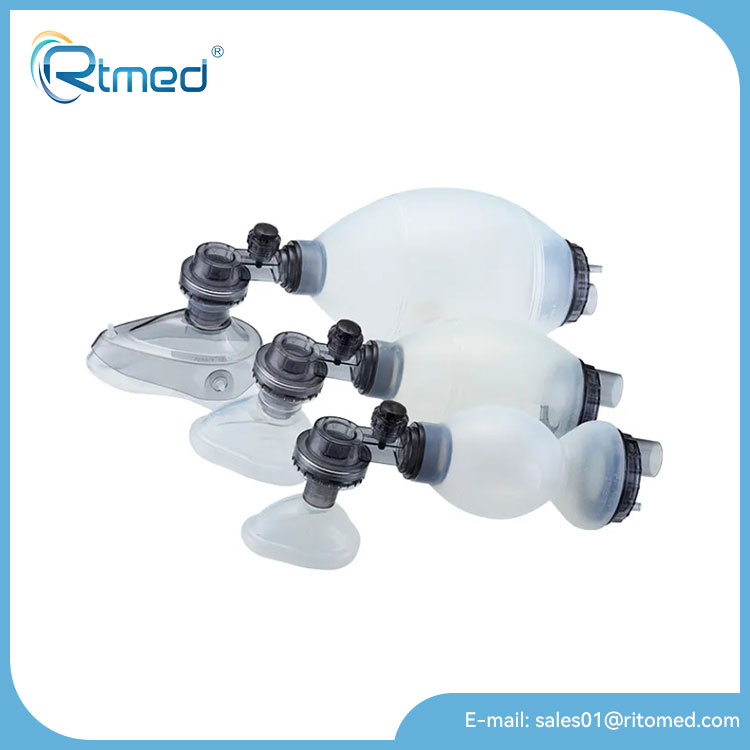
Table of Contents
Introduction
In emergency medicine, every second counts when a patient stops breathing or experiences respiratory failure. A manual resuscitator is one of the most essential tools used in these situations. It provides immediate ventilation support without requiring electricity or complex machinery, making it indispensable in hospitals, ambulances, and field rescue operations.
RTMED designs and supplies professional-grade respiratory support devices, including manual resuscitators, that meet the needs of critical care environments and emergency responders.
What Is a Manual Resuscitator?
A manual resuscitator, often referred to as a bag-valve-mask (BVM), is a handheld device used to deliver positive pressure ventilation to patients who are not breathing adequately. It consists of a self-inflating bag, a one-way valve system, and a face mask that seals over the patient’s airway.
Unlike mechanical ventilators, manual resuscitators rely entirely on human operation. This makes them highly reliable in power outages, pre-hospital emergencies, and disaster scenarios.
Key Components Explained
The efficiency of a manual resuscitator depends on the coordination of several critical parts:
- Self-inflating bag: Compresses air into the patient’s lungs when squeezed.
- Patient valve: Ensures one-way airflow toward the patient.
- Reservoir bag: Increases oxygen concentration when connected to oxygen supply.
- Face mask: Creates a secure seal over the patient’s mouth and nose.
- Oxygen inlet: Allows supplemental oxygen delivery for higher efficiency.
How a Manual Resuscitator Works
The working principle of a manual resuscitator is based on positive pressure ventilation. When the operator squeezes the bag, air is forced through a one-way valve and delivered into the patient’s lungs via the mask. When the bag is released, it automatically refills with air or oxygen.
Basic mechanism:
- Compression phase: Air is pushed into lungs.
- Release phase: Bag re-expands and refills with oxygen.
- One-way valves prevent backflow and contamination.
This cycle mimics natural breathing and ensures oxygenation until spontaneous breathing resumes or advanced ventilation is available.
Step-by-Step Usage Guide
Proper usage is critical to ensure effective ventilation and patient safety.
- Check device integrity before use (bag, valve, and mask).
- Position patient’s airway using head tilt-chin lift method if no trauma is suspected.
- Place mask securely over nose and mouth to form airtight seal.
- Squeeze bag gently at a controlled rhythm (about 10–12 breaths per minute for adults).
- Observe chest rise to confirm adequate ventilation.
- Connect oxygen supply if available for higher oxygen concentration.
Types and Comparison
| Type | Material | Best Use Scenario | Advantages |
|---|---|---|---|
| Disposable Manual Resuscitator | PVC | Emergency single-use situations | Low cost, reduces infection risk |
| Reusable Silicone Resuscitator | Medical-grade silicone | Hospitals and long-term use | Durable, easy to sterilize |
| Pediatric Resuscitator | Soft silicone | Infant and child ventilation | Controlled pressure, safer for children |
Common Mistakes in Usage
Incorrect use of a manual resuscitator can reduce oxygen delivery efficiency or cause complications. Common errors include:
- Excessive squeezing causing lung injury
- Poor mask seal leading to air leakage
- Incorrect ventilation rate
- Failure to check valve function before use
Training and repeated practice are essential to ensure correct operation in high-pressure environments.
Maintenance and Storage
Proper maintenance ensures reliability in emergency situations. Reusable manual resuscitators should be cleaned and sterilized after each use.
- Disassemble all components after use
- Wash with medical-grade disinfectant
- Dry completely before storage
- Store in a clean, dust-free environment
Clinical Applications
Manual resuscitators are widely used in:
- Emergency rooms and intensive care units
- Ambulance and pre-hospital care
- Cardiopulmonary resuscitation (CPR)
- Anesthesia induction and recovery
- Disaster and field medical operations
RTMED provides reliable respiratory support devices designed to perform in these critical environments.
FAQ
Q1: How often should a manual resuscitator be replaced?
Disposable models are single-use, while reusable ones should be replaced according to manufacturer guidelines or when damaged.
Q2: Can a manual resuscitator be used without oxygen supply?
Yes, but oxygen concentration will be lower compared to when connected to an oxygen source.
Q3: Is special training required?
Yes, proper training ensures correct ventilation technique and patient safety.
Q4: What makes RTMED products reliable?
RTMED focuses on medical-grade materials, strict quality control, and ergonomic design suitable for emergency care.
Conclusion
A manual resuscitator is a simple yet vital device that plays a critical role in saving lives during respiratory emergencies. Understanding its structure, function, and correct usage ensures better patient outcomes and reduces operational risks.
With professional solutions from RTMED, healthcare providers can rely on high-quality resuscitation equipment designed for precision, safety, and durability.
Contact
For more information about high-quality manual resuscitators and other respiratory medical equipment, contact RTMED today. Our team is ready to support your clinical and emergency care needs with professional solutions tailored to your requirements.