Differences Between 24-Hour and 72-Hour Closed Suction Catheters
The core differences between 24-hour and 72-hour closed suction catheters lie in service life, structural design, clinical application scenarios and cost. The 72-hour type is designed for long-term use with enhanced structures such as isolation valves / automatic flushing systems, while the 24-hour type is a basic and simple model.
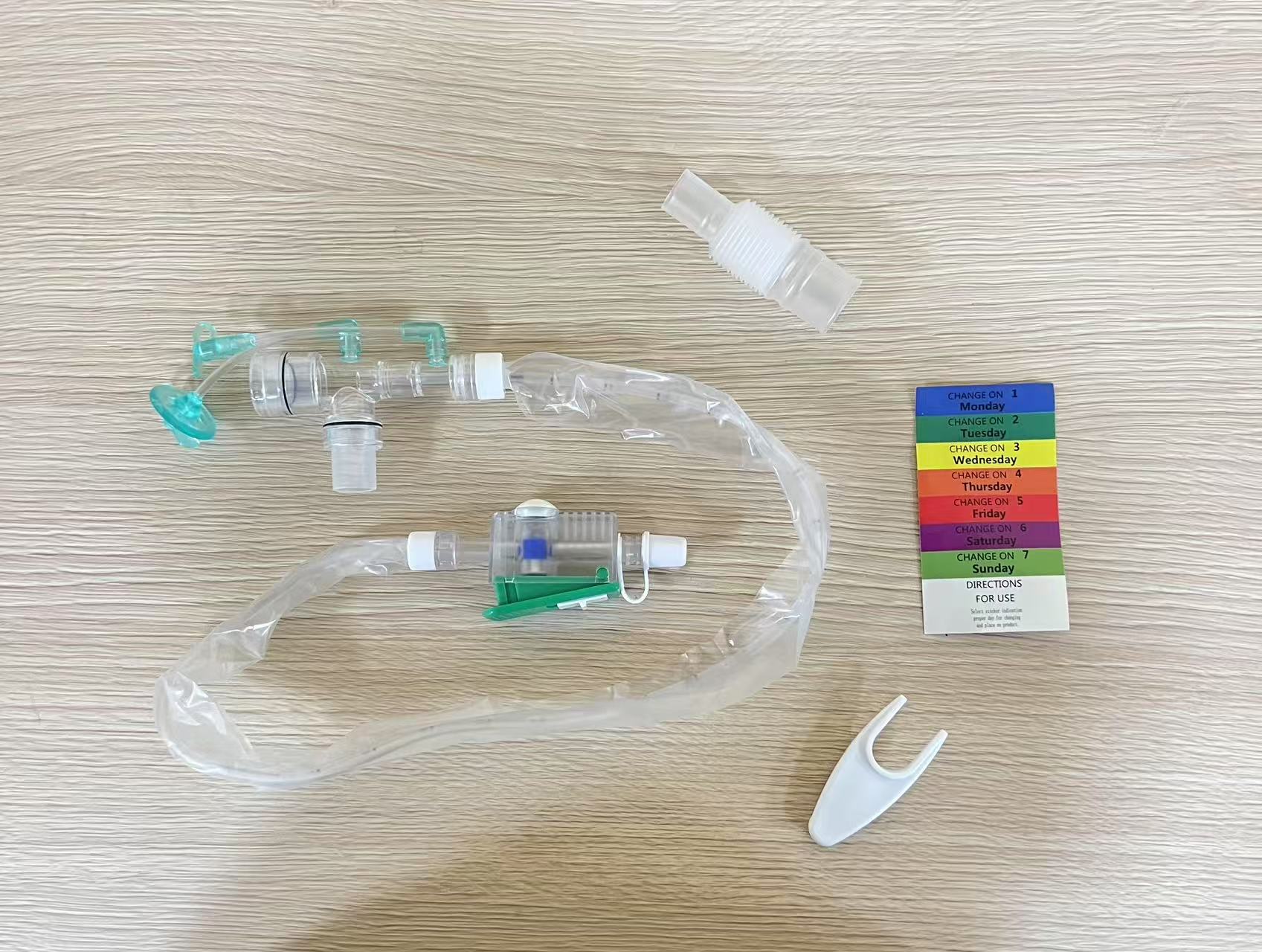
1. Core Differences
|
Comparison Items |
24-Hour Closed Suction Catheter |
72-Hour Closed Suction Catheter |
|
Service Life |
≤24 hours, replaced daily |
≤72 hours, replaced every 3 days |
|
Structural Design |
Basic type without isolation valve or automatic flushing system, simple structure |
Equipped with isolation valve / automatic flushing switch, stronger sealing and anti-reflux performance |
|
Flushing / Contamination Prevention |
Manual flushing without independent isolation chamber, prone to contamination during long-term use |
Isolation valve forms an independent flushing chamber; flushing will not contaminate the airway or ventilator circuit |
|
Clinical Application |
Short-term mechanical ventilation (≤24h), general ICU / wards |
Medium and long-term mechanical ventilation (within 3 days), ICU critical care, scenarios requiring reduced circuit replacement |
|
Clinical Efficiency |
Daily replacement, frequent operations and heavy workload |
Replaced every 3 days, significantly reducing replacement frequency and workload |
|
Cost |
Low unit price but high total long-term cost due to daily replacement |
Higher unit price but lower total cost within 3 days due to less frequent replacement |
|
Infection Risk |
Controllable risk for short-term use; frequent long-term replacement may increase contamination risk |
Long-acting sealing + isolated flushing, theoretically reducing the risk of VAP (Ventilator-Associated Pneumonia) |
2. Structural and Functional Details
24-Hour Type (Basic Model)
Components: Vacuum control device, protective sheath, suction catheter, irrigation port, rotating connector, etc., without isolation valve.
Flushing: Manual flushing port without independent isolation chamber; flushing fluid may reflux into the airway.
Operation: Simple press-type negative pressure switch without anti-mis-touch lock, suitable for short-term, low-frequency suctioning.
72-Hour Type (Long-Acting Model)
Components: Based on the 24-hour type, isolation valve / automatic flushing switch and sealing push plate are added to form an independent cleaning chamber.
Flushing: When the isolation valve is closed, the suction catheter is completely isolated from the airway; flushing is performed only inside the catheter without reflux or contamination risk.
Operation: Push plate reversing / automatic switch, one-handed operation + anti-mis-touch lock, suitable for high-frequency, long-term suctioning scenarios.
Additional features: Mostly equipped with MDI medication port, depth marker and 360° rotating connector for improved operation convenience.
3. Clinical Application and Selection Recommendations
Applicable Scenarios
24-hour type: Short-term mechanical ventilation (postoperative monitoring, emergency short-term support), stable patient condition, low suction frequency, limited budget with single consumable cost control.
72-hour type: ICU critical care, medium and long-term mechanical ventilation (≥48h), thick sputum / frequent suctioning, strict VAP risk reduction, pursuit of clinical efficiency.
Selection Principles
Short-term use (≤24h): 24-hour type is more cost-effective.
Medium and long-term use (24–72h): 72-hour type is preferred to reduce replacement, infection and labor costs; clinical evidence supports its safety.
Special conditions: For patients with severe airway infection or extremely thick sputum, the replacement cycle of the 72-hour type can be shortened (e.g., 48h) or switched back to the 24-hour type.
4. Key Notes
Both 24-hour and 72-hour types are for single use only, and re-sterilization / reuse is strictly prohibited.
Sterile normal saline / humidification fluid for flushing must be replaced every 24 hours, regardless of the suction catheter replacement frequency.
Although the 72-hour type is long-acting, patency and sealing integrity of the catheter must be evaluated daily; replace immediately in case of contamination or blockage.
Clinical selection should be comprehensively determined based on patient condition, suction frequency, department infection control standards and budget.