Latex vs Silicone Foley Catheter Application Differences
1. Latex Foley Catheter
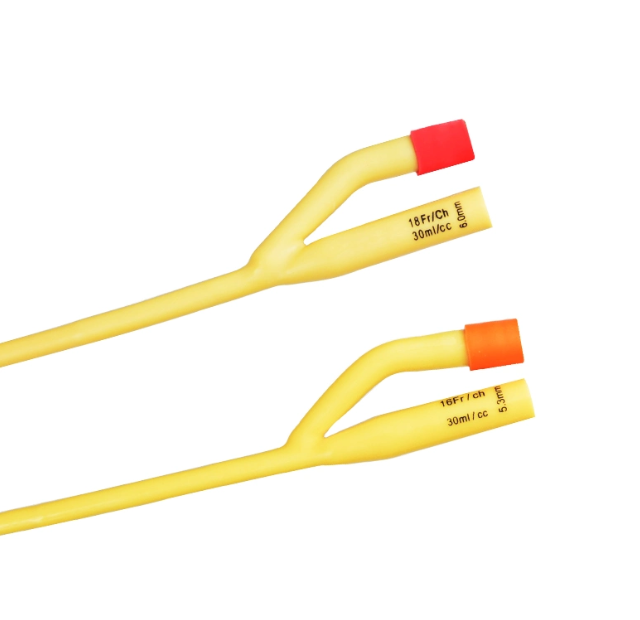
Material: Natural latex, good elasticity, smooth surface, cost-effective.
Indwelling Time: Short-term use only, ≤7 days.
Indications:
Routine short-term catheterization in operating rooms, emergency rooms and general wards.
Patients with no history of latex allergy.
Clinical scenarios requiring cost-effective disposable urinary drainage.
Contraindications:
Not suitable for long-term indwelling.
Forbidden for patients with latex/rubber allergy.
2. 100% Silicone Foley Catheter
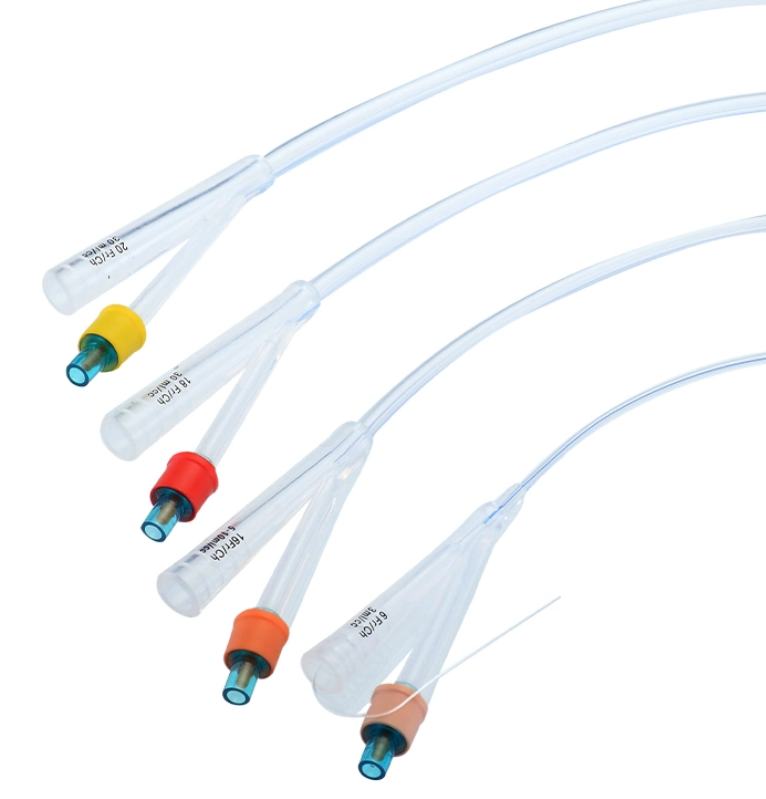
Material: Medical grade silicone, excellent biocompatibility, non-toxic, non-irritating.
Indwelling Time: Long-term use, up to 28–30 days.
Indications:
Long-term indwelling catheterization for home care, nursing homes and rehabilitation patients.
Patients with latex allergy or sensitive urethral mucosa.
Elderly, pediatric, female patients requiring higher comfort.
Postoperative urological care to reduce irritation and infection risk.
Advantages:
Less tissue reaction, lower risk of urethral irritation and hematuria.
Smooth surface, less encrustation, lower infection rate.
Suitable for long-term indwelling to reduce replacement frequency.
3. Summary
Latex Catheter: Short-term hospitalization, routine use, economic choice.
Silicone Catheter: Long-term indwelling, anti-allergy, high comfort, low infection risk.