How do I choose a Nasal Oxygen Cannula that actually fits real-world care?
When I first tested Rito solutions beside other brands, I realized how much small design choices shape patient outcomes. In this guide I share what I look for in a Nasal Oxygen Cannula, why those details matter in clinics and homecare, and how I verify performance before committing to a bulk PO. You’ll see my checklists, quick tests, and the trade-offs I make when a Nasal Oxygen Cannula needs to balance cost control with true comfort.
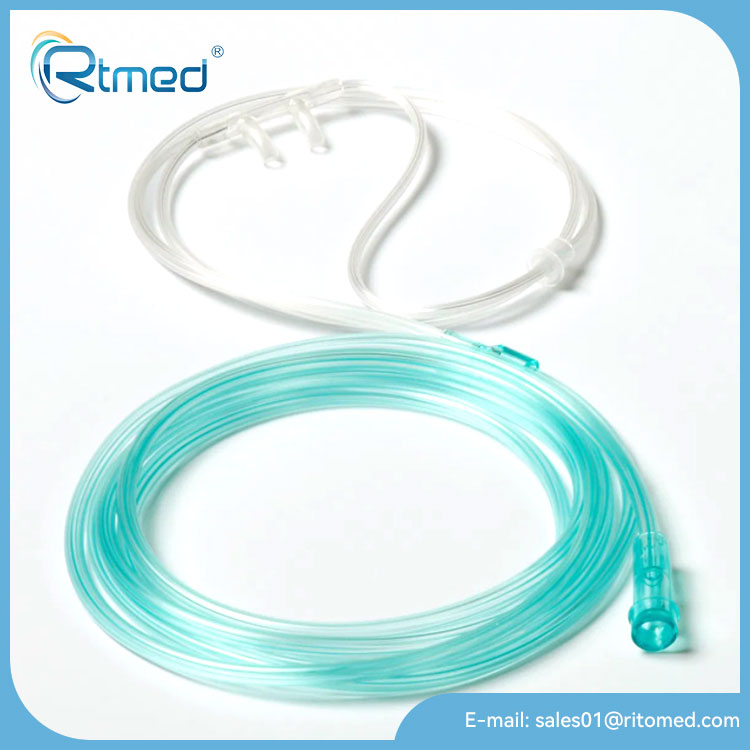
Why does the cannula’s “feel” decide adherence?
Patients keep devices on when they forget they’re wearing them. I run a quick comfort screen before any rollout:
- Touch test: tubing should feel supple, not sticky; cheek contact should be smooth after 10 minutes.
- Nares geometry: soft, rounded prongs that don’t “dig in” during speech.
- Weight distribution: strain relief near the Y-site to reduce ear pressure.
- Noise check: minimal hiss at target flow so night use stays tolerable.
A Nasal Oxygen Cannula that passes these basics cuts red marks, reduces fidgeting, and improves overnight adherence—small wins that add up to fewer returns.
What flow-delivery details actually show up in daily use?
Engineering claims mean little if bedside readings drift. My practical checks:
- Stable lumen: tubing should resist kinking when coiled or tucked under bedding.
- Connector seal: a snug but easy push fit with standard oxygen outlets; no micro-leaks on mild tug.
- Prong orientation: set to keep laminar delivery toward the nasal cavity, not the septum.
- Condensation control: tubing wall that limits moisture “spit” during long runs.
When a Nasal Oxygen Cannula maintains consistent flow on a portable concentrator, I see fewer saturation dips during ambulation and fewer nurse call events.
Which materials make sense for sensitive skin?
Skin reactivity and soreness drive most complaints. I prefer soft medical-grade options with smooth edges and optional ear cushions. With Rito, I check batch consistency by spot-inspecting clarity, odor (should be neutral), and weld seams—tiny cues that a Nasal Oxygen Cannula won’t surprise me after a thousand-piece shipment.
How do I size and configure without overcomplicating procurement?
I usually standardize on adult and pediatric sizes, then add a low-flow and a medium-to-high-flow variant. For homecare kits, I include clip-on sliders and a small bag of cushions so the same Nasal Oxygen Cannula adapts to different faces without new SKUs.
What quick bench tests help me avoid field failures?
- Kink test: wrap the tube around two fingers; release—memory should recover instantly.
- Pull test: light tension at the connector; no visible loosen or swirl leaks.
- Sleep simulation: route behind ears and under pillow for 30 minutes; check ear marks.
- Flow check: verify indicated L/min vs. measured end at the nares with a simple analyzer.
If a Nasal Oxygen Cannula clears these, it’s rare that I hear about nocturnal dislodgement or irritated skin the next week.
Where do comfort and cost meet for large orders?
The cheapest option is expensive if it triggers non-adherence. I evaluate landed cost against returns, nurse time, and replacement frequency. With Rito, I’ve negotiated packs that bundle ear cushions and sliders, reducing add-on purchases and keeping per-patient costs predictable.
Which spec trade-offs should I weigh before I lock the PO?
| Decision point | Lean choice | When I pick it | What I watch |
|---|---|---|---|
| Prong softness | Extra-soft | Long wear, fragile skin | Shape memory after a week |
| Tubing diameter | Standard lumen | General wards, homecare | Kink resistance on coiling |
| Flow range | Up to 5 L/min | Typical low-flow therapy | Noise at 4–5 L/min |
| Connector fit | Universal slip | Multiple device brands | Seal tightness under tug |
| Accessories | Slider + ear pads | Night users, mobile users | User instructions clarity |
How do I roll out a new cannula with fewer surprises?
I pilot with a small cohort, log comfort scores at 24 hours and 7 days, and capture any re-taping or re-positioning events. Training is minimal—fit, gentle angle into nares, and slack management around the ears. The best Nasal Oxygen Cannula is the one staff forget to mention because it “just works.”
What makes Rito a pragmatic partner when I need scale and consistency?
Lead times matter as much as softness. I’ve had consistent cartons, clean lot labeling, and responsive tweaks when I requested packing changes for faster ward distribution. That reliability, plus patient-first ergonomics, is why I keep Nasal Oxygen Cannula options from Rito on my shortlist for both tenders and replenishment cycles.
How can you move from trial to confident procurement today?
If you’re balancing patient comfort, inventory simplicity, and budget discipline, start with a small evaluation batch and run the same checks I listed. I’m happy to share my worksheets and help you match a Nasal Oxygen Cannula configuration to your setting. Ready to compare samples, request specs, or discuss private-label packs—contact us now so we can align on flows, sizes, and delivery windows. Your next Nasal Oxygen Cannula rollout should be quiet, comfortable, and on time—let’s make that happen together.